
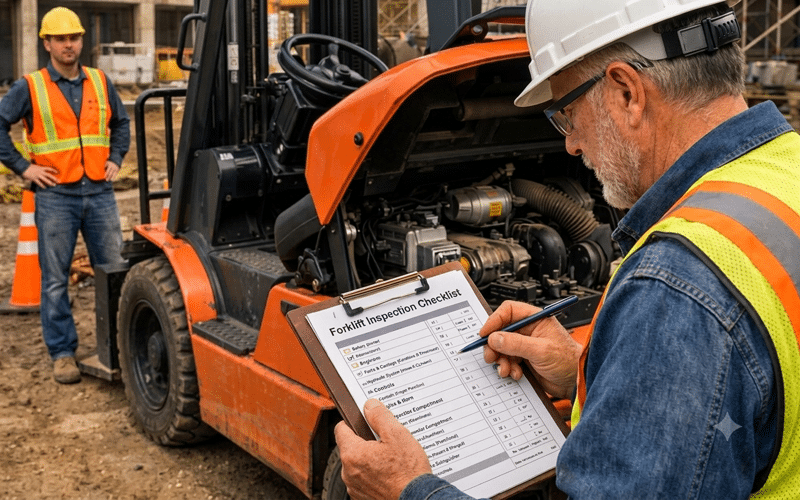
Construction sites involve constant movement of workers, materials, heavy equipment, etc. Therefore, it is crucial that all equipment, including forklifts, should perform at an optimum level to ensure workplace safety. In this regard, regular forklift inspection is crucial on construction sites to prevent workplace accidents. Additionally, it helps ensure OSHA and workplace safety compliance. Further, regular inspection helps detect damage early, which prevents costly repairs and possible downtime. Besides, routine inspection and maintenance help extend the forklift’s lifespan.
Construction site-specific inspection
Construction sites need to assess their site conditions to determine whether they may affect forklift safety and performance.
Ground conditions
Construction sites involve varied terrain. Therefore, you need to assess the condition of the terrain to identify possible hazards. For instance, muddy terrain may reduce traction, loose gravel may affect stability, etc. In such conditions, you need to select the right forklift for construction sites.
Visibility around the worksite
Operators need to assess visibility in the job site before each shift. Such an assessment can help identify potential hazards like blind corners, overhead obstacles, temporary fencing, etc. Accordingly, they need to establish safe travel routes and maintain clear communication with workers nearby.
Weather considerations
Weather conditions can affect forklift safety. For instance, rain might create a slippery surface, snow and ice can reduce traction, dust might affect visibility, etc. In such conditions, you need to schedule forklift operations accordingly.
Daily Pre-Operation Forklift Inspection Checklist on Construction Sites
Regular pre-operation forklift inspection is crucial on construction sites to identify potential issues before they can cause safety concerns.
Exterior condition
You should check for visible signs of damage, such as dents, cracks, bent components, corrosion, or loose parts. Additionally, you should check for signs of fluid leaks beneath the machine. It might indicate issues related to hydraulic, fuel, coolant, or engine systems. Additionally, check the chassis, overhead guard, mast, and counterweight to identify possible structural issues that can affect stability or operator protection.
Tires
Forklift tires play a crucial role in maintaining stability, traction, and load handling performance on construction sites. Therefore, pre-operation inspection includes checking each tire for excessive wear, cuts, punctures, etc. Besides, you should check pneumatic tires for proper air pressure and solid tires for excessive wear.
Forks and attachments
The forks are one of the critical components as they help support the forklifts in lifting various loads. You should check for bends, cracks, excessive wear, or uneven fork height. In this regard, ensure the fork heels and tips are not damaged. If you use forklift attachments such as clamps, rotators, or side shifters, inspect them for secure mounting, smooth operation, or structural damage.
Hydraulic system
Hydraulic components help support lifting, lowering, and tilting operations. You should check hydraulic hoses, cylinders, fittings, and seals for leaks, cracks, abrasions, or loose connections. Further, operate the lift and tilt functions without a load to ensure smooth, consistent movement. If you notice any jerky operation, unusual noises, or delayed response, it might indicate possible hydraulic issues that you need to address immediately.
Forklift mast
You should inspect the forklift mast for visible damage, excessive wear, etc. Further, check the lift chains for corrosion, stretched links, damaged pins, and proper lubrication. You need to ensure chain tension is even on both sides. Additionally, you should inspect mast rollers, guides, and bearings for excessive wear. Well-maintained forklift mast components help ensure smooth lifting operations and reduce the risk of mechanical failure.
Fluid levels
You should check the fluid levels of your forklifts before operation to prevent overheating, equipment damage, and unexpected downtime. In this regard, check the engine oil, hydraulic fluid, coolant, brake fluid, etc. You should also check for contamination or discoloration that might indicate internal mechanical issues.
Battery or fuel system
For electric forklifts, you should inspect the battery to ensure it has adequate charge before every shift. Additionally, check battery terminals for corrosion. Also, ensure cables are securely connected without fraying or exposed wiring. Further, verify that connectors are free from damage and that battery restraints are properly secured.
On the other hand, for diesel, gasoline, or LPG forklifts, you need to ensure that there is sufficient fuel for the work shift. In this regard, inspect fuel lines, fittings, and tanks for leaks or damage. For LPG-powered units, ensure the cylinder is properly mounted, the locking mechanism is secure, and the hose connections do not have any leaks or excessive wear.
Brakes and steering
You should check both service brakes and parking brakes before each shift. Ensure that the forklifts stop smoothly without pulling to one side or making unusual noises. Further, ensure the steering responds immediately with no excessive play, stiffness, or vibration. If you notice any issues concerning braking or steering, you need to fix them before using them during your shift.
Lights and warning devices
As construction sites often involve limited visibility, you need to ensure all lighting and warning devices are working properly. In this regard, inspect headlights, brake lights, flashing beacon, backup alarm, horns, etc. Additionally, check the mirrors, cameras, and proximity warning systems to ensure they are working properly.
Operator controls
You should also check every operating control to ensure a smooth and accurate response. In this regard, check steering wheels, accelerator, brake pedal, lift and tilt controls, instrument panel and gauges, etc. Besides, you should monitor the dashboard for warning lights or fault codes that might indicate possible maintenance issues.
Seat
You should inspect the operator’s seat for damage, loose mounting hardware, or excessive wear. Also, confirm that the seat adjusts correctly to provide proper visibility and ergonomic support. Further, check the seat belt to ensure it locks securely and retracts properly.
Scheduled Maintenance Checklist
In addition to daily pre-operation inspection, you should also perform scheduled forklift maintenance. Daily inspections help identify immediate forklift safety concerns. On the other hand, regular maintenance helps maintain forklift reliability.
Lubrication
Proper lubrication helps reduce friction and prevents premature wear. In this regard, you should follow the manufacturer’s maintenance schedule when applying grease to mast channels, rollers, lift chains, pivot pins, and other moving components. You should clean the lubrication points before applying fresh grease.
Fasteners and bolts
Construction sites may cause significant forklift vibration that can loosen fasteners over time. Hence, you should inspect structural bolts, mast mounting hardware, wheel nuts, overhead guard fasteners, and attachment mounting points.
Air filter and cooling system
Dust and debris are common on construction sites. They can quickly clog air filters and reduce engine efficiency. Hence, you should inspect air filters regularly and clean or replace them as needed. Additionally, check the radiator, cooling fan, coolant hoses, and reservoir for leaks, blockages, or signs of overheating. Maintaining the cooling system can help prevent costly engine damage.
Electrical system
You should inspect the forklift’s electrical components for loose wiring, damaged insulation, and corrosion. Further, check the battery terminals for secure connections and clean away corrosion if needed. You should also ensure that all fuses are intact and switches, sensors, and electronic controls are working properly. If you identify any electrical issues, you should address them immediately to prevent unexpected forklift failures.
Titan Forklifts has designed and built forklifts with your business in mind. Our forklifts are built to last and serviced by professionals. Regular maintenance helps extend the lifespan of our forklifts. On the other hand, daily pre-operation forklift inspection on construction sites helps meet operational needs throughout the shift while maintaining workplace safety. Get in touch with our authorized dealers to select the right forklift model for construction sites.