
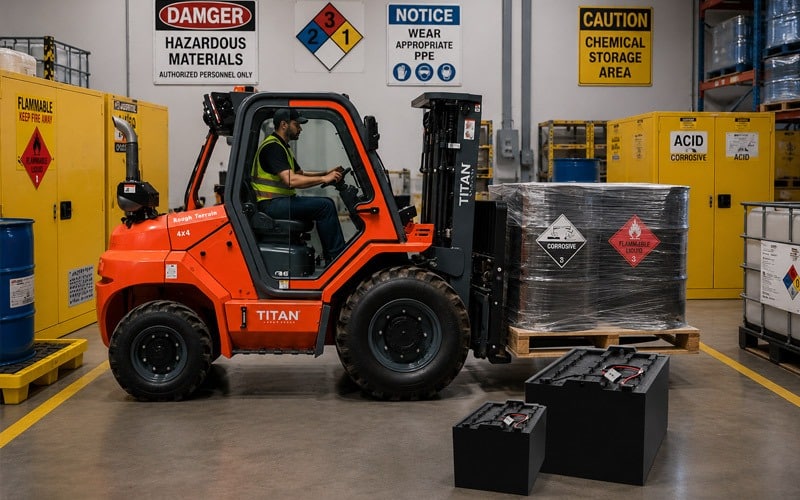
A hazardous environment involves the use of substances such as flammable gases, chemical vapors, combustible dust, and volatile substances. They can create dangerous conditions if exposed to sparks, excessive heat, or electrical faults. Hence, these facilities need forklifts that help minimize the risk of ignition.Lithium-ion forklift batteries play a crucial role in hazardous environments to reduce operational risks while improving uptime.
Industries Commonly Operating in Hazardous Environments
The following industries operate in hazardous environments. Let’s discuss further.
- Chemical manufacturing – Chemical plants frequently handle volatile substances that can react to heat or sparks. Therefore, these facilities use forklifts that provide reliable performance while reducing potential ignition sources.
- Oil and gas facilities – Oil refineries, drilling sites, and fuel storage facilities contain flammable gases and liquids that require strong safety measures. Therefore, they require forklifts that help meet these safety standards to prevent accidents.
- Pharmaceutical plants – Pharmaceutical manufacturing facilities often operate in controlled environments where safety, cleanliness, and operational reliability are critical. Hence, they need forklifts that will comply with strict industry regulations.
- Food processing facilities – Food processing operations frequently involve temperature-controlled environments, combustible dust from ingredients, and high sanitation standards. Therefore, these facilities need reliable forklift batteries to maintain productivity and support workplace safety.
- Warehouses handling hazardous materials – Warehouses that store chemicals, fuels, aerosols, and other hazardous goods require forklifts that can operate safely around potentially dangerous materials.
Possible Risks in Hazardous Environments
Various forms of risks are involved in facilities that deal with hazardous substances. Let’s discuss further.
- Sparks and ignition sources – Even a small electrical spark can trigger a fire or explosion if flammable substances are present nearby. Therefore, forklift batteries and electrical systems should be designed to minimize the possibility of accidental ignition.
- Battery overheating – Excessive heat generation can compromise battery performance and create safety concerns. Proper thermal management is critical in environments where temperatures may already be elevated.
- Acid leaks and corrosive substances – Traditional lead-acid batteries contain liquid electrolytes that can leak or spill if damaged or improperly maintained. It can pose risks to employees, equipment, and facility infrastructure.
- Equipment downtime– Forklift battery-related issues can disrupt operations, affect productivity, and increase operational costs. A reliable forklift battery is crucial to reduce unexpected downtime and maintain continuous operations.
Key Benefits of Lithium-Ion Forklift Batteries in Hazardous Environments
The following are the key benefits of using lithium-ion forklift batteries in hazardous environments. Let’s discuss further.
- Reduced risk of acid leaks and spills – Lithium-ion batteries utilize sealed construction that prevents electrolyte leakage during normal operation. This design helps create a safer work environment.
- Advanced Battery Management Systems (BMS) – Integrated Battery Management Systems continuously monitor key operating parameters. They include voltage, current, and battery health to ensure optimal performance.The BMS protects batteries from operating outside safe limits. It helps prevent damage and extend battery life.
- Temperature monitoring – Advanced sensors monitor battery temperatures and detect issues before they become serious. It further helps improve overall operational safety.
- Lower maintenance requirements – Lithium-ion batteries do not require routine watering. It helps reduce maintenance tasks and associated safety risks.
- Consistent power delivery – Lithium-ion batteries help maintain consistent voltage levels during operation. It helps ensure that forklifts perform efficiently throughout the shift. Further, stable power output helps forklifts maintain lifting capacityand operational efficiency even under heavy workloads.
- Faster and opportunity charging – Lithium-ion batteries can be recharged much faster than conventional lead-acid batteries. As a result, it allows forklifts to return to service faster.Further, opportunity charging during breaks or shift changes reduces the need for battery replacement. It helps increase equipment availability and operational efficiency.
Selecting Lithium-Ion Forklift Batteries in Hazardous Environments
When selecting lithium-ion forklift batteries in hazardous environments, you need to consider the following aspects. Let’s discuss further.
- Battery certifications and compliance – When selecting lithium-ion forklift batteries for hazardous environments, businesses need to verify that they meet applicable industry standards and certifications for their facility.
- Explosion-Proof – Certain facilities may require specialized lithium-ion batteries designed for use in classified hazardous environments. Understanding these requirements is essential to selecting the right forklift battery.
- Compatibility with existing forklift fleets – Not all lithium-ion batteries are universally compatible with every forklift model. Therefore, businesses need to assess their forklift requirements before upgrading to lithium-ion batteries. In this regard, you can consult Titan Forklifts’ authorized dealers to select the right forklift for your facility.
- Battery capacity and operational demands – Forklift battery capacity should align with operational needs to ensure efficiency.
- Facility operating conditions – Businesses need to consider environmental factors such as temperature, humidity, and workload intensity when selecting lithium-ion forklift batteries in hazardous environments.
Best Practices for Using Lithium-Ion Forklift Batteries in Hazardous Environments
When using lithium-ion forklift batteries in hazardous environments, businesses need to implement the following best practices.
- Regular battery inspections – Routine battery inspections help identify performance issues. It also helps ensure batteries continue operating safely and efficiently.
- Identifying potential issues early – Early detection of issues can prevent forklift failures and reduce the likelihood of costly downtime.
- Safe charging procedures – Facilities need to follow proper charging practices, battery handling, and equipment operation to maintain workplace safety.
- Emergency response protocols – Facilities need to ensure their workers understand how to respond to battery-related incidents and follow established emergency procedures when needed.
- Following manufacturer guidelines – Facilities should adhere to manufacturer-approved charging practices to maximize battery life and maintain safe operation.
- Maintenance and storage requirements – Proper storage conditions and inspection scheduleshelp ensure long-term lithium-ion forklift battery reliability in hazardous environments.
Lithium-ion forklift batteries are beneficial for facilities that operate in hazardous environments. Titan Forklifts presents a wide range of electric forklifts with lithium-ion batteries. Let our team assess your facility’s needs to recommend the right lithium-ion forklift for your facility.