
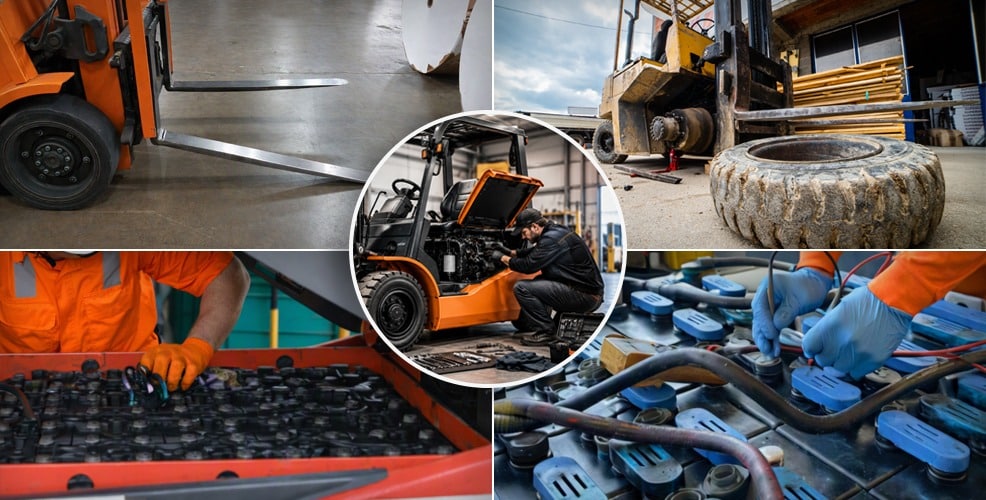
Forklifts experience wear and tear from daily use. Ignoring routine maintenance can lead to unexpected breakdowns, costly repairs, and increased safety risks. Many common forklift problems, such as battery failures, hydraulic leaks, worn brakes, tire damage, etc., develop gradually. Most of these forklift breakdown problems can be prevented by regular maintenance. Hence, regular preventive maintenance and pre-shift inspection are crucial to ensure safe and reliable forklift operation.
Common Forklift Breakdown Problems Prevented by Regular Maintenance
The following are common forklift breakdown problems that can be prevented by regular maintenance. Let’s discuss further.
Battery problems in electric forklifts
Poor forklift battery maintenance can lead to reduced runtime, unexpected power loss, slow lifting performance, and costly battery replacement. Many battery-related failures develop gradually. Regular inspections and proper charging practices can help prevent these issues.
- Inspect battery connections for looseness or corrosion
- Follow the manufacturer’s recommended charging schedule
- Regularly clean battery terminals to ensure proper electrical contact
- Check electrolyte levels in lead-acid batteries and refill when necessary
- Avoid overcharging or completely discharging the battery
- Keep batteries clean and dry to prevent electrical issues
Engine problems in diesel, LPG, and gas forklifts
Internal combustion or IC forklifts rely on well-functioning engines to deliver consistent power. Poor engine maintenance can reduce fuel efficiency, increase emissions, and lead to unexpected breakdowns. Common engine problems include dirty air filters, fuel contamination, worn spark plugs, and cooling system issues
Preventive engine maintenance improves performance and reliability.
- Replace air and fuel filters at recommended service intervals
- Inspect the fuel system for contamination or leaks
- Replace worn spark plugs in LPG and gasoline forklifts
- Monitor coolant levels and inspect hoses for leaks
- Check engine oil levels and change oil according to the maintenance schedule
Hydraulic System Failures
One of the common forklift problems that can be prevented by regular maintenance is hydraulic system failures. The hydraulic system powers the lifting, tilting, and lowering functions of a forklift. Even a minor issue can reduce lifting capacity, slow operating speeds, or create serious safety hazards. Common issues include hydraulic fluid leaks, worn hoses, damaged seals, and low hydraulic fluid.
Preventive maintenance can help ensure effective hydraulic system operation.
- Inspect hydraulic hoses, cylinders, and fittings for wear or leaks
- Replace leaking seals before they cause pressure loss
- Monitor hydraulic fluid levels and top up with the recommended fluid
- Repair hydraulic leaks immediately to prevent contamination and component damage
- Replace damaged hoses before they burst under pressure
Brake System Issues
Forklift brakes are essential for safe operation, especially when transporting heavy loads in busy work environments. Worn or malfunctioning brakes increase stopping distances and significantly raise the risk of accidents. Regular brake inspections can help prevent these forklift problems. You may notice issues such as –
- Worn brake pads
- Brake fluid leaks
- Reduced stopping performance
- Brake pedal problems
Regular brake maintenance helps prevent costly repairs and improves operator safety.
- Inspect brake pads, discs, and drums during scheduled servicing
- Replace worn brake components when needed
- Check brake fluid levels and inspect for leaks
- Test braking performance before every shift
- Investigate unusual noises or reduced braking effectiveness immediately
Tire Wear and Damage
Forklift tires affect stability, traction, and load-handling performance. Damaged or worn tires can reduce maneuverability, increase stopping distances, and place additional strain on steering and suspension components. Well-maintained tires can support forklift performance and extend tire life.
- Perform regular visual tire inspections
- Maintain proper tire pressure for pneumatic tires
- Replace damaged or excessively worn tires
- Rotate tires if recommended by the manufacturer
- Remove debris embedded in tire surfaces
Mast and Lift Chain Wear
The mast and lift chains support and raise heavy loads throughout the workday. Continuous lifting cycles gradually wear these components, increasing the risk of load instability and equipment failure. Regular servicing ensures safe and efficient lifting operations.
- Lubricate lift chains according to the manufacturer’s recommendations
- Check chain tension and adjust when necessary
- Inspect rollers, bearings, and mast rails for wear
- Verify mast alignment during routine maintenance
- Replace excessively worn chains before they fail
Transmission Problems
Transmission failures often develop gradually and become expensive repairs if ignored. Regular servicing helps maintain smooth operation and prevents premature wear. Common transmission problems you may notice are –
- Slipping gears
- Rough shifting
- Low transmission fluid
- Overheating
Routine transmission maintenance can help minimize costly repairs.
- Check transmission fluid levels regularly
- Replace transmission fluid according to manufacturer recommendations
- Inspect for transmission leaks
- Address unusual noises or shifting problems immediately
- Avoid overloading the forklift, which places excessive stress on the transmission
Electrical System Failures
Loose wiring or damaged electrical components can result in starting issues, intermittent faults, or complete equipment shutdowns. Signs of electrical problems in your forklifts include –
- Faulty wiring
- Blown fuses
- Malfunctioning switches
- Loose electrical connections
Routine electrical inspections help maintain reliable operation.
- Inspect wiring harnesses for wear or damage
- Tighten loose electrical connections
- Replace blown fuses with the correct ratings
- Test lights, alarms, warning indicators, and operator controls
- Protect electrical components from moisture and contamination
Fork Damage
Forks bear the full weight of transported loads and are exposed to constant stress during daily operations. Damage to these components can compromise load stability, increase the risk of dropped loads, and create serious safety hazards. Regular inspections help ensure your forks are working properly.
- Inspect forks before every shift
- Measure fork wear and replace forks that exceed manufacturer wear limits
- Replace cracked or bent forks immediately
- Avoid welding or attempting to repair damaged forks unless permitted by the manufacturer
Most of these forklift breakdown problems can be reduced or prevented by regular maintenance. Hence, both pre-shift inspection and regular preventive maintenance are crucial for safe and reliable forklift operations. At Titan Forklifts, our dealer training program includes detailed guidelines for routine maintenance to ensure equipment longevity and performance. Titan Forklifts team will help you with regular preventive maintenance to support safe forklift operations at your facilities.