
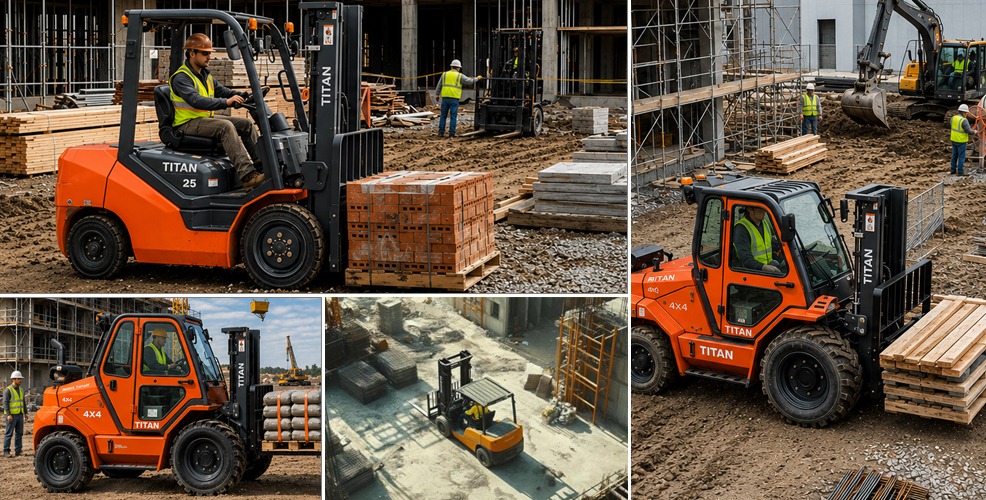
Construction sites involve various working environments. Based on their varying operational needs, the ideal forklift type will also vary. For instance, forklifts well-suited for transporting pallets of bricks might not be suited for transporting landscaping or HVAC materials. Selecting the right forklift for each construction trade helps improve productivity, reduce downtime, and enhance operator safety. Selecting the Right Forklifts for … Read More
How to Perform a Forklift Inspection on Construction Sites?
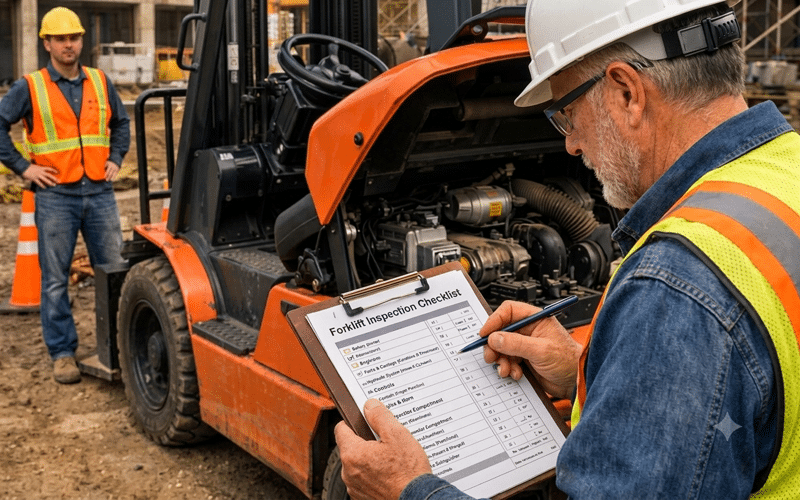
Construction sites involve constant movement of workers, materials, heavy equipment, etc. Therefore, it is crucial that all equipment, including forklifts, should perform at an optimum level to ensure workplace safety. In this regard, regular forklift inspection is crucial on construction sites to prevent workplace accidents. Additionally, it helps ensure OSHA and workplace safety compliance. Further, regular inspection helps detect damage … Read More
Rough Terrain and All-Terrain Forklifts – Which One Is Better For Construction Sites?
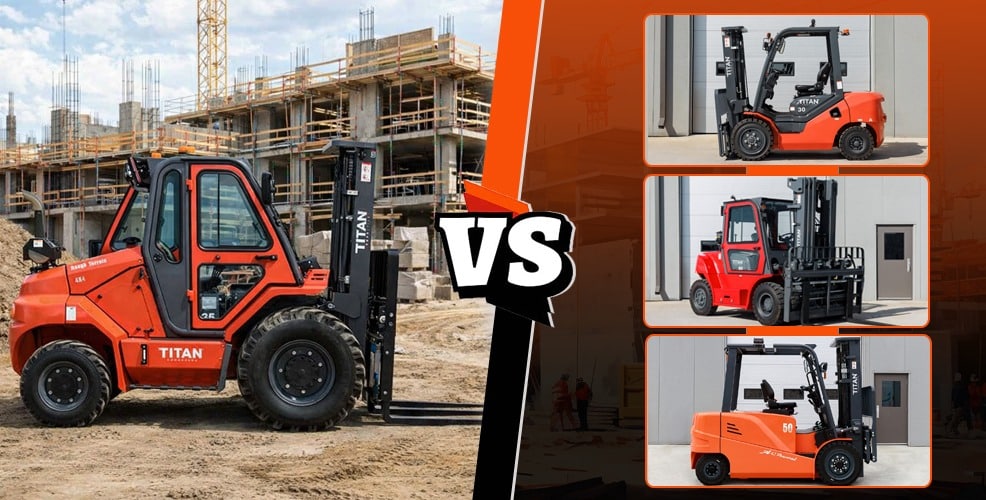
Construction sites involve varied terrain. Hence, choosing the right forklift is critical to improve productivity and maintain workplace safety. Whether you are transporting pallets of bricks, steel beams, lumber, or construction supplies, the right forklift can help minimize downtime, reduce operating costs, and improve efficiency. Both rough terrain forklifts and all-terrain forklifts are commonly used in the challenging environments of … Read More
Forklift Safety Rules Every Construction Site Should Follow

Construction sites have a demanding environment due to the simultaneous movement of workers, materials, and heavy machinery. Forklifts play a crucial role in construction sites to transport concrete blocks, bricks, wood, metals, and other construction materials efficiently. Forklifts are one of the leading causes of workplace accidents. Hence, construction sites need to follow proper forklift safety rules to maintain workplace … Read More
Role of Lithium-Ion Forklift Batteries in Hazardous Environments?
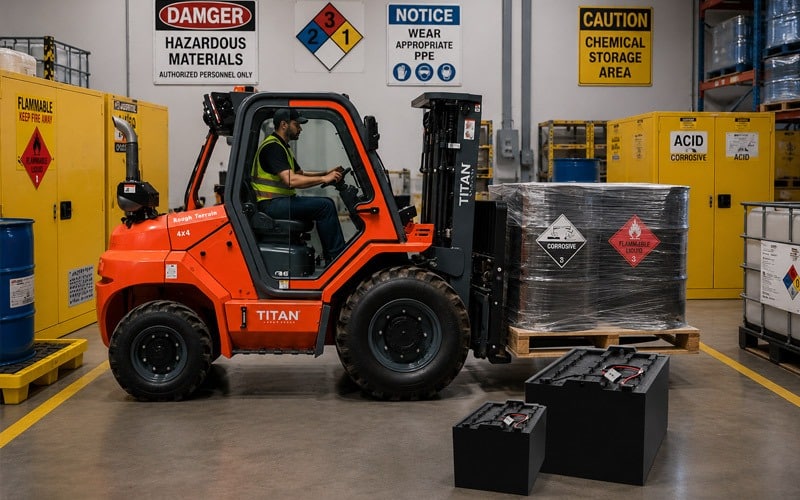
A hazardous environment involves the use of substances such as flammable gases, chemical vapors, combustible dust, and volatile substances. They can create dangerous conditions if exposed to sparks, excessive heat, or electrical faults. Hence, these facilities need forklifts that help minimize the risk of ignition.Lithium-ion forklift batteries play a crucial role in hazardous environments to reduce operational risks while improving … Read More
Role of Lithium-Ion Batteries in Cold Storage Units
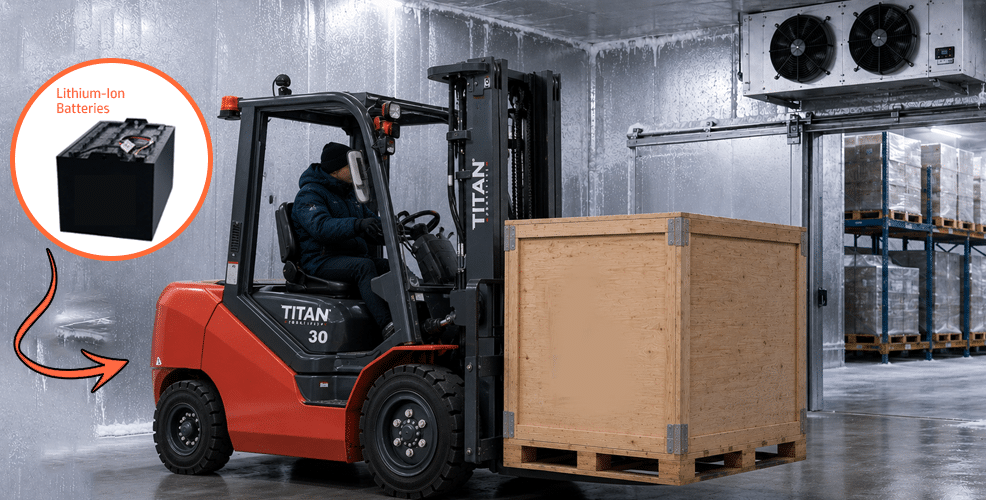
Cold storage units are crucial to store perishable products such as food, medicine, etc. Often these units operate in sub-zero temperatures. These facilities can create challenges for forklift battery performance.When the temperature drops, battery chemical reactions slow down, reducing efficiency and performance.Traditional batteries do not work well for a cold storage unit. On the other hand, lithium-ion batteries maintain a … Read More
Warning Signs Your Forklift Battery Needs Replacement – Lead-Acid and Lithium-Ion

Identifying early signs of possible forklift battery failure is crucial to prevent downtime, emergency replacement, or loss of productivity. Various factors can affect forklift battery life. These include operating conditions, workload intensity, temperature exposure, etc. You need to look out for possible signs of battery failure. It will allow you to replace forklift batteries in time to improve workplace safety … Read More
How to Select the Right Forklift Batteries for High-Utilization Forklift Fleets?

Selecting the right forklift batteries based on operational needs is crucial for improving productivity and reducing operating costs. High-utilization forklift fleets are quite common in businesses like warehouses, distribution centers, etc. These businesses need to select the right forklift batteries to improve efficiency and reduce downtime. Lithium-ion and lead acid are two of the most common battery technologies used in … Read More
Should Your Business Replace Lead-Acid Forklift Batteries with Lithium-Ion?

Lead-acid forklift batteries are usually reliable. However, owing to their needs for regular watering, lengthy charging cycles, and dedicated battery changing areas, they may not be suitable for high-demand operations. On the other hand, lithium-ion batteries have become easily accessible and cost-effective. Many businesses are now considering replacing lead-acid with lithium-ion forklift batteries to improve uptime, reduce operational inefficiencies, and … Read More
Forklift Batteries for Single-Shift Warehouses – Lead-Acid or Lithium-Ion

Selecting the right forklift battery is crucial to support warehouse productivity, reducing downtime, etc. Every warehouse has different operational needs. Hence, businesses need to ensure that their forklift batteries can support these needs to prevent long-term expenses. As single-shift warehouses operate with tighter budgets and on a limited schedule, they need to select the right battery to improve performance and … Read More